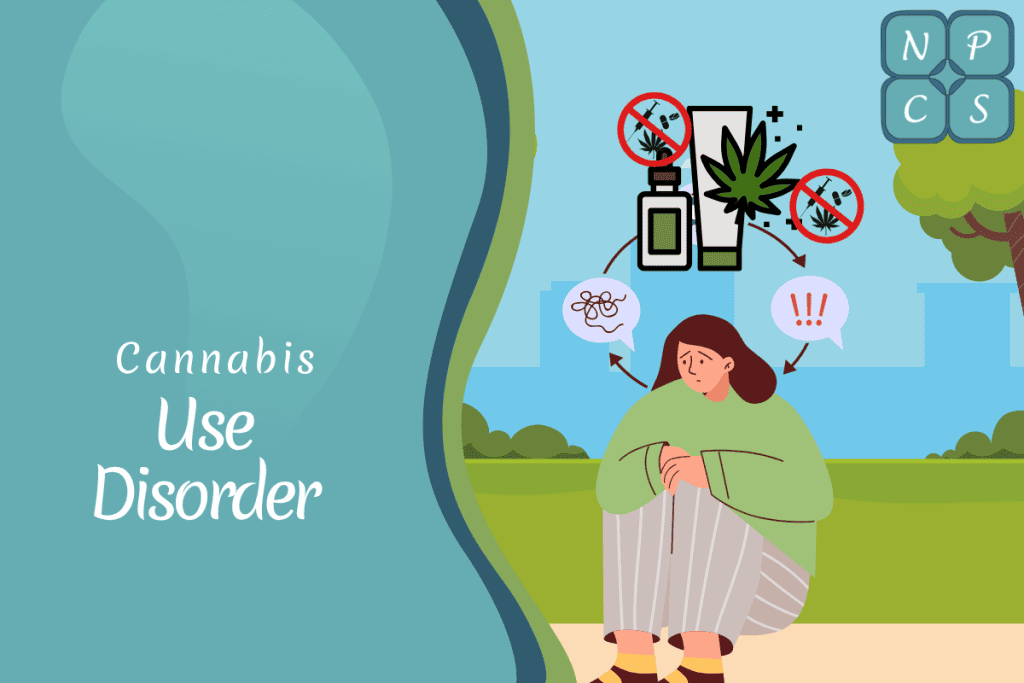
Cannabis use looks different from person to person. Some people use cannabis occasionally, while others use it more regularly for relaxation, sleep, recreation, or other reasons. Using cannabis does not automatically mean that someone has an addiction or a mental health condition.
Cannabis Use Disorder is a condition in which a person has difficulty controlling their weed use, continues using despite negative effects, and may experience problems with relationships, work, school, health, or daily responsibilities. It can range from mild to severe and may involve cravings, unsuccessful attempts to cut back, tolerance, or withdrawal. Not everyone who uses weed develops cannabis use disorder, but it may become a concern when cannabis starts to feel difficult to manage or interferes with everyday life.
When this pattern continues despite problems, it may be a sign of cannabis use disorder. Understanding what cannabis use disorder is can help you recognize the warning signs and know when getting support may be helpful.
What Is Cannabis Use Disorder?
Cannabis Use Disorder (CUD) is a substance use condition in which a person has difficulty controlling their weed or marijuana use, even though it is causing problems in their life. These problems may affect relationships, work, school, physical health, emotional well-being, or everyday responsibilities.
Cannabis Use Disorder can range from mild to severe. A person does not have to use cannabis every day or experience major consequences before their drug use becomes concerning. What matters is whether the use of weed has become difficult to control and whether the person continues using it despite harmful effects of cannabis on their health or daily life.
The Centers for Disease Control and Prevention (CDC) estimates that about 3 in 10 people who use weed or marijuana have Cannabis Use Disorder, making it an important public health concern. The risk is greater among people who begin using cannabis at a younger age and those who use it more frequently.

Cannabis Use vs. Cannabis Use Disorder
It is important to understand the difference between using cannabis and having Cannabis Use Disorder.
Someone may use cannabis without experiencing serious problems or losing control over how often they use it. They may also be able to reduce or stop their use when they choose.
With Cannabis Use Disorder, the relationship with marijuana becomes harder to manage. A person may repeatedly try to cut back without success, experience strong cravings, or continue using after recognizing the negative effects of marijuana on their health, relationships, work, or daily responsibilities.
The criteria for cannabis use disorder focus on patterns such as loss of control, cravings, difficulty cutting back, and continued use despite harmful consequences. In other words, the concern is not simply whether you use cannabis. It is how marijuana use is affecting you and how much control you feel you have over it.
What Are the Symptoms of Cannabis Use Disorder?
Cannabis Use Disorder symptoms can look different for everyone. Some signs may be easy to recognize, while others develop gradually and can be difficult to notice.
Common signs include:
- Using more cannabis than you planned
- Trying to reduce or stop but struggling to do so
- Spending a lot of time obtaining, using, or recovering from cannabis
- Experiencing strong cravings
- Continuing to use despite problems at home, work, or school
- Continuing despite relationship problems connected to cannabis
- Giving up hobbies or activities because of cannabis use
- Using cannabis in unsafe situations, such as before driving
- Continuing to use even when you believe it is affecting your physical or mental health
- Needing more cannabis to experience the same effects
These are among the signs the CDC identifies when describing Cannabis Use Disorder.
Having one difficult experience with marijuana does not necessarily mean someone has CUD. A medical professional or provider offering mental health services will consider the overall pattern of use, how long the symptoms have been present, and how much they are affecting the person’s daily life.
Tolerance
Tolerance can develop when the body becomes accustomed to cannabis.
Someone may notice that the amount they used before no longer produces the same effect. They may begin using larger amounts or products with higher concentrations of THC.
Increasing tolerance can be one warning sign of Cannabis Use Disorder, particularly when it is accompanied by difficulty controlling use.
Cannabis Withdrawal
People who use marijuana regularly may also experience withdrawal when they significantly reduce or stop using it.
Symptoms can include:
- Irritability
- Anxiety or nervousness
- Restlessness
- Trouble sleeping
- Changes in appetite
- Strong cannabis cravings
- Mood changes
- Unusual or vivid dreams
- Headaches
Withdrawal experiences vary from person to person.
Experiencing withdrawal does not mean that you are weak or that you cannot stop. It means your body and brain have adapted to regular cannabis exposure and may need time to adjust.
What Causes Cannabis Use Disorder?
There is no single cause of Cannabis Use Disorder.
Instead, CUD usually develops through a combination of biological, emotional, behavioral, and environmental factors. Two people may use marijuana in similar ways but have very different experiences.
Frequent Cannabis Use
The more frequently cannabis is used, the greater the risk of developing Cannabis Use Disorder.
Regular use can gradually become part of someone’s routine. What began as occasional use may eventually become something a person feels they need to relax, sleep, socialize, eat, or manage uncomfortable emotions.
The CDC identifies frequent cannabis use as an important risk factor for CUD.
Starting Cannabis at a Younger Age
Beginning cannabis use during adolescence is also associated with a greater risk of developing Cannabis Use Disorder.
The brain continues developing through adolescence and young adulthood. Starting earlier also gives patterns of regular use more time to become established.
According to the CDC, people who begin using cannabis during youth or adolescence have an increased risk of developing CUD.
High-THC Cannabis Products
THC, or tetrahydrocannabinol, is the main intoxicating chemical in cannabis.
Cannabis products can vary greatly in how much THC they contain. Some concentrates, vape products, and other forms of cannabis contain much higher THC levels than traditional cannabis flower.
Higher-potency products can produce stronger effects and may increase the risk of overconsumption. Researchers are continuing to study how increasingly potent cannabis products affect the development and severity of Cannabis Use Disorder.
Using Cannabis to Cope With Difficult Emotions
Sometimes cannabis use begins as an attempt to feel better.
A person may use it when dealing with:
- Stress
- Anxiety
- Depression
- Trauma
- Loneliness
- Relationship problems
- Difficulty sleeping
- Emotional pain
Cannabis may temporarily change how someone feels. The challenge comes when it becomes the main or only way someone knows how to manage difficult emotions.
Over time, a cycle can develop:
Stress or uncomfortable feelings → cannabis use → temporary relief → problems related to use → more stress → more cannabis use.
Treatment can help break this cycle without blaming the person for how they learned to cope.
Genetics and Environment
Family history and environment can also influence someone’s risk of developing a substance use disorder.
Factors associated with substance-use risk can include family history, other mental health conditions, social isolation, peer influences, family environment, and access to substances.
None of these factors means someone will definitely develop Cannabis Use Disorder. They simply help explain why some people may be more vulnerable than others.
How Can Cannabis Use Disorder Affect Daily Life?
Cannabis Use Disorder is not only about how much cannabis someone uses. It is also about how that use affects everyday life.
Mental and Emotional Health
Some people may notice increased anxiety, mood changes, difficulty concentrating, or feeling as though they cannot relax without cannabis.
Cannabis can affect areas of brain function involved in memory, attention, learning, decision-making, coordination, emotions, and reaction time.
Cannabis use has also been associated with certain mental health concerns. However, these relationships are complicated, and cannabis is not necessarily the sole cause of someone’s symptoms.
Relationships
Cannabis use can sometimes create tension between partners, family members, or friends.
A loved one may become concerned about how often someone is using cannabis. The person using cannabis may feel criticized or misunderstood. Over time, arguments, secrecy, withdrawal, or loss of trust can develop.
These problems deserve compassion on both sides. Shame usually does not help people change. Honest communication and appropriate support often do.
Work, School, and Responsibilities
Cannabis Use Disorder may also interfere with everyday responsibilities.
Someone may find it harder to concentrate, stay motivated, arrive on time, complete tasks, or keep up with obligations.
Others may organize their schedule around when they can use cannabis or avoid situations where cannabis is unavailable.
When cannabis begins shaping important decisions and responsibilities, it may be worth taking a closer look at the pattern.
How Is Cannabis Use Disorder Diagnosed?
There is no single blood test or brain scan that can tell someone whether they have Cannabis Use Disorder.
Instead, a qualified mental health or medical professional will talk with the person about their cannabis use and how it affects their life.
They may ask about:
- How often cannabis is used
- How much is typically used
- Attempts to reduce or quit
- Cravings
- Tolerance
- Withdrawal symptoms
- Work or school
- Relationships
- Physical and mental health
- Other substance use
Clinicians use established diagnostic criteria to determine whether Cannabis Use Disorder is present and whether it is mild, moderate, or severe. Current diagnostic criteria consider a pattern of symptoms occurring within a 12-month period.
The purpose of an evaluation is not to label or shame you. It is to understand what is happening and decide what kind of support may be useful.
Can You Be Addicted to Cannabis?
Yes. Cannabis can become addictive.
You may hear people use terms such as cannabis addiction, marijuana addiction, or cannabis dependence. Cannabis Use Disorder is the clinical diagnosis used to describe problematic cannabis use that ranges from mild to severe.
Not everyone who uses cannabis develops CUD. But repeatedly trying to stop and being unable to, continuing despite negative consequences, or feeling that cannabis has become necessary to get through the day may signal a problem worth discussing with a professional.
You also do not need to call yourself an “addict” to get help. Treatment should focus on your health and goals, not on giving you a label.
How Is Cannabis Use Disorder Treated?
Cannabis Use Disorder is treatable.
Treatment is not about punishing someone for using cannabis. It is about understanding the pattern, reducing harm, restoring a sense of control, and helping the person build healthier ways of coping.
The right treatment plan depends on the person’s needs, goals, mental health, support system, and severity of cannabis use.
Cognitive Behavioral Therapy
Cognitive behavioral therapy (CBT) can help people recognize the connection between thoughts, emotions, situations, cravings, and cannabis use.
For example, someone might discover that they almost always use cannabis after an argument or when they feel overwhelmed at night.
Therapy can then help them develop other responses, such as:
- Managing cravings
- Handling stress
- Improving problem-solving
- Setting boundaries
- Building healthier routines
- Preparing for situations that may trigger cannabis use
CBT is one of the primary behavioral approaches studied for Cannabis Use Disorder.
Motivational Enhancement Therapy
Some people are not completely sure whether they want to stop using cannabis.
That is normal.
Motivational enhancement therapy (MET) helps people honestly explore how cannabis fits into their lives. Instead of pressuring someone to change, therapy helps them think about what they want, what cannabis gives them, what it costs them, and whether their current behavior matches their goals.
This approach can be particularly useful when someone feels torn between wanting to make a change and wanting to continue using.
Contingency Management
Contingency management uses positive reinforcement to encourage treatment goals, such as attending appointments or meeting agreed-upon substance-use goals.
It may be combined with other forms of therapy rather than used alone.
Research supports behavioral approaches such as CBT, motivational enhancement, and contingency management for people with Cannabis Use Disorder, although outcomes differ among individuals.
Treating Mental Health Concerns at the Same Time
Cannabis use does not always happen in isolation.
Some people are also living with anxiety, depression, trauma, chronic stress, sleep difficulties, or another substance-use problem.
In these cases, treatment may need to address both cannabis use and the concerns underneath it.
Instead of only asking:
“How can I stop using cannabis?”
Therapy may also explore:
“What has cannabis been helping me cope with, and what healthier ways can I develop to meet that need?”
Treating the whole person can be an important part of lasting change.
What Happens When You Stop Using Cannabis?
Stopping cannabis can feel different depending on how frequently and how heavily someone has been using it.
Some people experience few noticeable problems. Others may experience irritability, anxiety, restlessness, appetite changes, sleep problems, cravings, or mood changes while their body adjusts.
Withdrawal can be uncomfortable, but you do not have to handle it alone. A therapist, doctor, or substance-use professional can help you understand what to expect, manage triggers, and make a realistic plan for reducing or stopping cannabis.
When Should You Seek Help for Cannabis Use?
You do not need to wait until cannabis has seriously damaged your life before getting support.
Consider talking with a professional if:
- You regularly use more cannabis than you planned.
- You have tried to quit or cut back without success.
- You feel strong cravings.
- Cannabis is creating problems in your relationships.
- Your work, school, or responsibilities are suffering.
- You need cannabis to relax, sleep, eat, or cope with emotions.
- You are using increasingly larger amounts.
- You feel uncomfortable when you stop.
- You continue using even though you believe it is hurting your physical or mental health.
Sometimes the clearest warning sign is simply this:
You are starting to wonder whether cannabis has more control over your life than you would like.
That question alone can be worth exploring.
Professional support does not automatically mean someone will tell you what you “have to” do. Good treatment begins by understanding your goals, concerns, and reasons for wanting things to change.
Final Thoughts
Cannabis Use Disorder does not mean you are weak, irresponsible, or lacking willpower. It means your relationship with cannabis may have developed into a pattern that has become difficult to control. Recognizing that pattern is not a failure. It can be the beginning of meaningful change.
Treatment can help you understand what is driving your cannabis use, manage cravings, address underlying mental health concerns, and develop healthier ways of coping. If cannabis is beginning to interfere with your health, relationships, responsibilities, or the life you want to live, consider talking with a qualified mental health or substance-use professional. You do not have to figure it out alone.
Until next time,