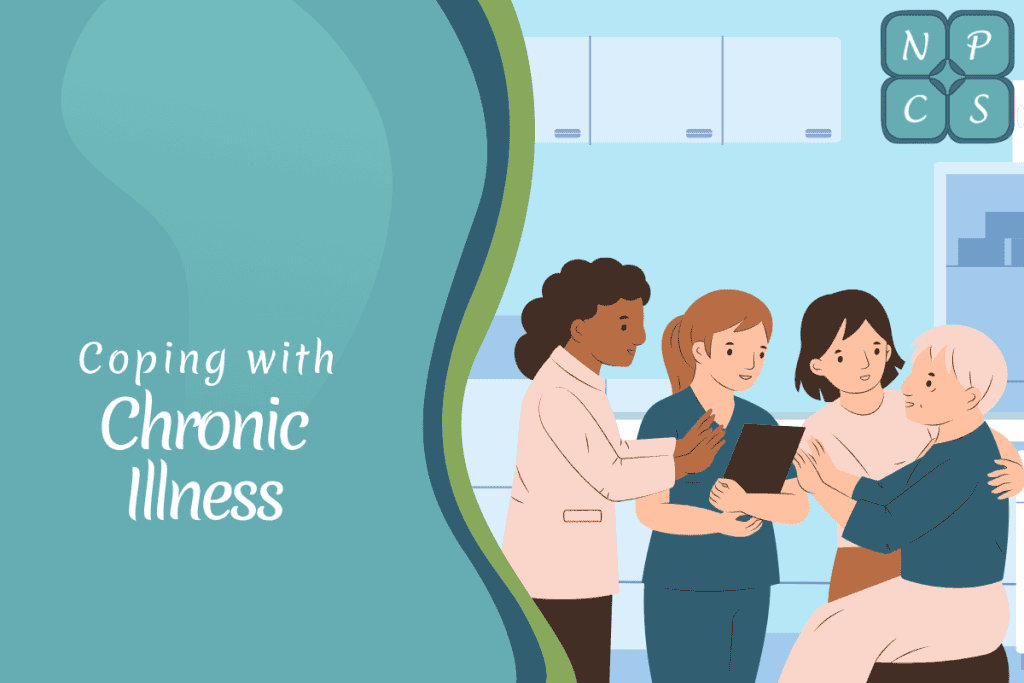
Coping with chronic illness is an ongoing process that involves caring for both your physical and emotional well-being. Living with a chronic illness or another chronic disease can bring grief, uncertainty, stress, and changes to your daily life, but developing healthy coping strategies can help you adapt and improve your quality of life. Learning skills such as stress management, self-compassion, emotional regulation, mindfulness, radical acceptance, and building a strong support system can make it easier to navigate chronic health challenges while continuing to live a meaningful, fulfilling life. Approaches such as acceptance and commitment therapy may also help you respond to difficult thoughts and emotions in healthier ways.
Focusing on the elements of your life that are within your control rather than perseverating on all the things that are not can also foster a sense of empowerment and resilience. Connecting with trusted loved ones, support groups, or professional help can provide additional emotional and practical support. Whether you’re newly diagnosed or have been managing a chronic illness for years, healing is about finding ways to cope that support your mental health, resilience, and overall well-being.
Being diagnosed with a chronic illness can impact far more than your physical health. It can drastically change your sense of self, affect your mental health, and influence how you view your life as a whole.
You may notice changes in:
- How you view your body
- Your roles at work, at home, and in relationships
- Your daily routines and abilities
- Your sense of independence
- Your future plans
- The way you define success, purpose, or fulfillment

Whether you were diagnosed recently or have been living with your chronic condition for years, identity is something that continues to evolve. Receiving a diagnosis is not the only time your sense of self can shift. New symptoms, disease progression, treatment changes, life transitions, or simply moving into a different stage of life can all bring new questions about who you are and how you fit into the world.
Over time, you may begin to feel like you are becoming someone different than you once were. This shift can leave you feeling disconnected from the person you remember being. Those who received a chronic disease diagnosis early in life must learn who they are apart from their diagnosis. Those who receive a diagnosis later in life may have to explore how an already established identity can shift to incorporate this new information.
You may find yourself grieving the life you expected to have, questioning your purpose, or wondering if you will ever feel like “yourself” again. Adjusting to new limitations, unpredictable symptoms, or changing abilities is rarely a one-time event. It is often an ongoing process of adapting and rediscovering yourself.
It is common to compare yourself to who you were before your illness or even to who you were during a period when your condition felt more manageable. You may think, “I used to be able to do this,” or “I don’t recognize myself anymore.” While these thoughts are understandable, constantly measuring yourself against a version of yourself that existed under different circumstances can keep you feeling stuck.
One of the most difficult, and ultimately freeing, parts of living with chronic illness is practicing radical acceptance.
Radical acceptance does not mean liking your illness, approving of what has happened, or giving up hope for improvement. It means acknowledging reality as it is today, rather than fighting against the fact that it exists. When we spend our energy wishing our circumstances were different, we often add another layer of psychological distress on top of the pain we are already experiencing.
Acceptance allows us to ask a different question.
Instead of, “Why is this happening to me?”
We can begin asking, “Given where I am today, how do I want to move forward?”
This shift naturally leads into another important concept: your locus of control.
A diagnosis of chronic illness often brings many things that are outside of your control. Physical symptoms, chronic pain, disease progression, doctor’s appointments, insurance challenges, and unexpected flare-ups can all leave you feeling powerless. These aspects of chronic illness may also affect your activities of daily living and contribute to stress, depression, and anxiety.
While you may not be able to control your diagnosis, you can begin identifying the areas where you still have a choice.
You can choose:
How you speak to yourself.
How you respond to difficult emotions.
The boundaries you set with others.
The activities that align with your current values and abilities.
The ways you care for your body, even when it feels like it is working against you.
The support you seek and the relationships you invest in.
Focusing on what remains within your control does not erase the hardships of chronic health conditions. Rather, it can become a form of active coping that helps restore a sense of agency. Healthy coping mechanisms, including seeking help from a mental health provider when needed, can remind you that your life is still yours to shape, even if it looks different than you once imagined.
Identity is not fixed. It evolves throughout our lives as our experiences, relationships, values, and circumstances change. For people living with chronic illness, identity shifts may happen gradually over time, fluctuate with symptom flares, or emerge years after a medical diagnosis as life continues to change. It is completely normal to feel like you have finally adjusted, only to find yourself navigating another change down the road.
Some days you may feel deeply connected to yourself, while other days you may feel like you have lost sight of who you are. Both experiences can exist at the same time.
Rather than asking, “How do I become the person I was before?” it may be more helpful to ask, “Who am I becoming?”
Your diagnosis may influence your story, but it does not define it.
Imagine a mosaic.
When you first receive a diagnosis, it can feel as though the life you knew has shattered into countless pieces. The image you had envisioned for yourself may no longer seem possible. In the beginning, all you may be able to see are the broken pieces.
Even years later, there may be moments that feel like another piece has shifted. A symptom changes, a treatment stops working, or a new limitation appears. You may find yourself rebuilding all over again.
But mosaics are not beautiful despite the broken pieces. They are beautiful because of how those pieces are thoughtfully brought together to create something new. It is not about putting everything back exactly as it was before. It is about gradually gathering the pieces, honoring what has been lost, discovering new strengths, and creating a life that reflects who you are now.
You are not starting over.
You are continuing your story.
And through every change, every setback, and every adaptation, one truth remains:
You are still you.
If this resonates with you, know that you do not have to navigate this journey alone. Psychotherapy can provide a space to grieve what has changed, reconnect with your values, explore who you are beyond your diagnosis, and begin building a life that feels meaningful again. A professional counselor can support you as you adjust to the emotional and identity changes that may accompany chronic medical conditions.
Whether you are newly diagnosed or have been living with chronic illness for decades, it is never too late to reconnect with yourself. If you are feeling lost, struggling to recognize yourself, or simply want support in discovering who you are in this season of life, I invite you to reach out. You deserve a space where every part of your experience is welcomed and where healing is measured by more than just your physical health.