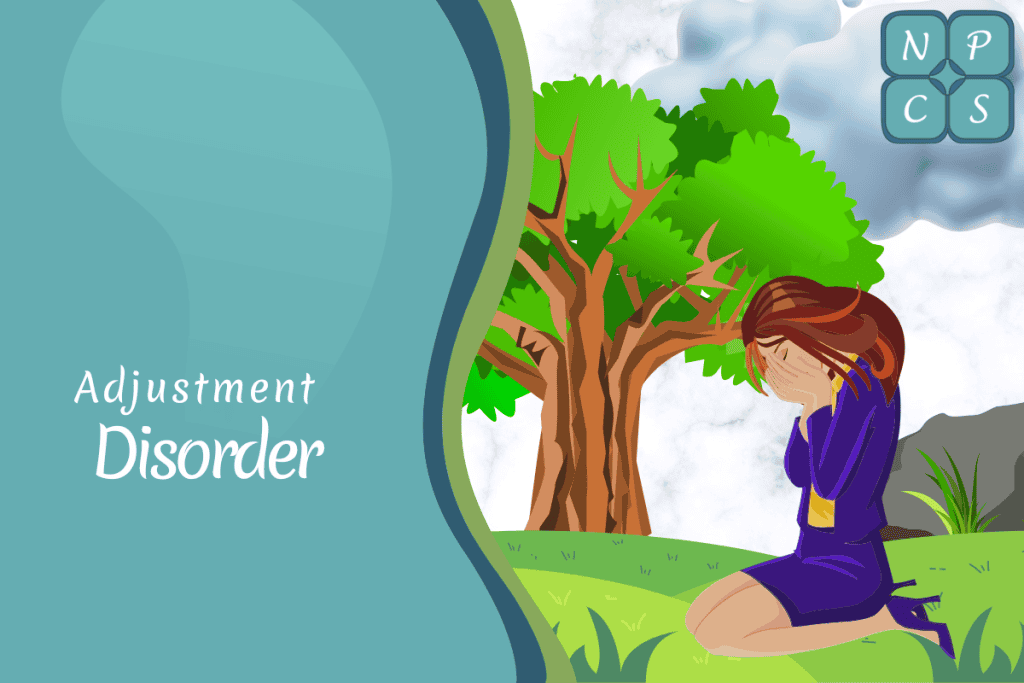
Big life changes can knock you off balance. Sometimes it is a painful change like a breakup, a loss, or a conflict that does not resolve. Other times it is a change you chose, like a new job, a move, or taking on a new role, and you still feel anxious, irritable, or emotionally exhausted. When that happens, it is common to start questioning yourself.
Adjustment disorder is a stress response that can show up after a specific life stressor. It can affect your mood, your thoughts, your sleep, and your ability to function the way you normally do. People often describe it as feeling “not like myself,” or feeling like they cannot catch their breath mentally and emotionally. This is not a sign of weakness. It is a sign your system is overloaded and needs support.
In this guide, I will explain what adjustment disorder is, what it looks like, why it happens, and what actually helps. My goal is to help you understand your experience in a compassionate, practical way so you can take the next step toward feeling steady again.
What Is Adjustment Disorder?
Adjustment disorder is a mental health condition that occurs when your emotional or behavioral response to a specific stressor becomes more intense than expected and begins to interfere with daily life. The stressor can be a single event, an ongoing situation, or a major transition.

This does not mean your reaction is “too much.” It means your stress response is activated and not settling the way it normally might. In many cases, the struggle is less about the event itself and more about what the event asks of you emotionally, mentally, and physically.
A practical definition is: adjustment disorder is when a life change triggers distress that affects your mood and functioning, and you have trouble adapting without additional support.
Common Symptoms of Adjustment Disorder
Symptoms can look different from person to person, but most fall into four areas: emotions, thoughts, behaviors, and the body. You may relate to only a few, or you may feel like several are happening at once. If these reactions started after a stressful event or life event, it can be a sign that your mental health is carrying more than it can hold right now.
Emotional symptoms
You might notice increased anxiety, sadness, irritability, or emotional sensitivity. Some people feel tearful and raw. Others feel numb or disconnected. In some cases, adjustment disorder may show up as adjustment disorder with anxiety, where worry feels constant, or adjustment disorder with depressed mood, where sadness and hopelessness feel heavier than usual.
It is also common to feel overwhelmed or helpless, especially if the stressor feels out of your control. When your nervous system is overloaded, it becomes harder to regulate emotions the way you usually can.
Thinking symptoms
Stress can make your thoughts louder and more rigid. You might overthink, replay conversations, or get stuck in “what if” spirals. Decision-making can feel harder, even for simple things. These symptoms can also start affecting school or work, making it harder to focus, show up, or feel productive the way you normally do.
A big sign is harsh self-talk. Thoughts like “I should be over this” or “Why can’t I handle this?” tend to increase shame, which increases stress, which keeps symptoms going.
Behavioral symptoms
When distress is high, behavior often shifts. You might avoid people, cancel plans, procrastinate, or pull away from support. You might also feel more reactive and get into more conflict than usual.
Avoidance makes sense in the short term because it reduces discomfort. The problem is it can shrink your life over time and reinforce the belief that you cannot cope.
Physical symptoms
Adjustment stress does not stay in your head. Many people notice sleep changes, fatigue, muscle tension, stomach issues, headaches, or a constant sense of being “on edge.”
Physical symptoms can be frustrating because they feel like something is wrong with your body. Often, your body is doing exactly what it was designed to do under stress: stay alert.
What Causes Adjustment Disorder?
Adjustment disorder begins with a stressor. This can include breakups, moves, job changes, financial stress, illness, family conflict, caregiving, or grief. Sometimes it is one large event. Sometimes it is several smaller stressors that stack up over time.
One reason the same event affects people differently is that stress does not occur in a vacuum. Your current support system, your sleep, your workload, your health, and your past experiences all influence how your nervous system responds.
If you have a history of trauma or chronic stress, your system may be more sensitive to uncertainty or instability. That does not mean you are broken. It means your system has learned to stay ready for the next problem.
Types of Adjustment Disorder
Adjustment disorder can be described by the main symptoms you experience:
- With anxiety
Worry, restlessness, tension, and feeling on edge.
- With a depressed mood
Sadness, tearfulness, hopelessness, or low motivation.
- With mixed anxiety and depressed mood
A blend of both anxiety and low mood.
- With disturbance of conduct
More behavioral changes, such as increased conflict, impulsive decisions, or acting out.
- With mixed disturbance of emotions and conduct
Both emotional distress and behavioral disruption.
Distress is present, and functioning is impacted, but it does not fit neatly into one category.
These labels are not meant to box you in. They help clinicians describe patterns so treatment can be more targeted.
Adjustment Disorder vs Anxiety, Depression, and PTSD
Many people wonder whether they are dealing with adjustment disorder or something else. These conditions can overlap, and the goal is not to self-diagnose perfectly. The goal is to understand what is happening so you can get the right support.
Adjustment disorder vs anxiety
Anxiety disorders can exist without a single clear trigger. Adjustment disorder is typically linked to a specific stressor or transition. Both can involve worry, tension, and physical symptoms.
Adjustment disorder vs depression
Depression can feel more global and persistent, and it often includes a deeper loss of interest or pleasure. Adjustment disorder is usually more closely connected to a specific change and may improve as adaptation improves.
Adjustment disorder vs PTSD
PTSD involves trauma exposure and a specific pattern of symptoms, including re-experiencing, avoidance, negative changes in mood and beliefs, and heightened arousal. Some life stressors are traumatic, and it is important to get a proper assessment if trauma symptoms are present.
What Helps Adjustment Disorder
Most people do better when they approach adjustment disorder in layers. You stabilize what you can, calm the body, and then work with the thought loops and behavior patterns that keep you stuck.
Start with stability
Sleep, meals, movement, and daily structure matter because they increase your capacity. You do not need perfection. You need consistency.
When your basics are unstable, your emotional coping is forced to work harder. Stabilizing basics often creates noticeable relief.
Calm the nervous system
When your body is in survival mode, your mind will usually follow. Calming the nervous system helps you think more clearly and react less intensely.
Work with the thought loop
Thoughts after a big change often become extreme, harsh, or catastrophic. CBT skills can help you challenge the story your stress is telling you and replace it with something more accurate and supportive.
Reconnect to support
Isolation makes stress louder. One supportive relationship, one honest conversation, and one small step toward connection can reduce symptoms more than people expect.
Treatment for Adjustment Disorder
Therapy for adjustment disorder is often practical and structured. We identify the stressor, name the symptoms, and create a plan that supports your body and mind.
In treatment, we may use CBT to reduce unhelpful thought patterns, somatic tools to help your body shift out of survival mode, and parts-work approaches to reduce shame and increase self-acceptance. Many people feel better when they stop fighting themselves and start understanding what their system needs.
How Long Does Adjustment Disorder Last?
Timelines vary. Many people improve within weeks to months, especially when the stressor is resolved or support increases. Symptoms can last longer if stress is ongoing, sleep is poor, or the change triggers unresolved pain from earlier experiences.
A helpful sign of healing is not that you feel great every day. It is that you recover faster after hard moments, your sleep improves, and you start to feel more like yourself again.
When to Get Help
If stress is affecting your sleep, relationships, work, or ability to function, that is a valid reason to get support. You do not need to wait for things to get worse.
Therapy can help you understand what is happening, build coping skills, and feel steadier during the transition. The goal is not to erase emotions. The goal is to help you carry them without falling apart.
Final Thoughts
Adjustment disorder is not a weakness. It is a sign that something big happened and your system is having a hard time adapting. With the right support, most people recover and regain their sense of steadiness.
If you recognize yourself in these symptoms, start small. Stabilize one basic routine, reach out to one supportive person, and consider talking with a professional who can help you make sense of what you are carrying. You do not have to push through this alone.
Until next time,